
For frame shops
Sell more Artglass, without selling harder
Most of your customers have never seen anti-reflective glass next to ordinary glass. Once they have, the upgrade mostly sells itself. This page collects what works at the counter: the display tools that show the difference, where to put them, how to price the upgrade so customers say yes, and how to keep the cutting margin in your own workshop.
Show, don’t tell
Display tools for your counter
Groglass’s own sales tools for frame shops, available through us. Tell us which ones you would like and we will come back with what is available.
Comparison shadowboxes
A framed scene behind ordinary glazing on one side and Artglass on the other. Customers see the difference from across the shop before you say a word. There are versions for anti-reflective glass and for Lifetime Acrylic.
Specifiers
Hand-held comparison cards to hold over the customer’s own artwork: one for AR 70, one comparing Lifetime Acrylic with standard acrylic, and a 4-in-1 card with the whole glass range.
Sample boxes
Boxed sets with a piece of each Artglass grade, so a customer can compare them side by side at the counter before choosing.
Cleaning kit & workshop extras
Ammonia-free Artglass cleaner, microfiber cloths and handling gloves: what anti-reflective glass should be cleaned and handled with. The boxed cleaning kit also makes a good thing to hand over with a finished frame.
Placement
Put the display where the decision is made
A comparison display only works if customers look at it while they are choosing. Groglass’s placement guidance comes down to four rules:
-
In the consultation area, at eye level
Where you discuss the frame with the customer, close to eye level, with enough space around it to stand out from everything else on the walls.
-
Ordinary on the left, Artglass on the right
Always the same way round, with a clear label on each side, such as “Regular glass” and “Artglass anti-reflective glass”.
-
Natural, indirect light
Daylight makes the ordinary glass show its reflection, which is the whole point. Keep spotlights and bright bulbs away from the front: they put a hot spot in the glass.
-
Dark tones behind the glass
If you frame your own comparison piece, choose artwork with dark, even areas and a black mat. That is where reflections are most visible.
Pricing
Price the upgrade so customers say yes
With one fixed multiplier on every glass, specialty glazing looks expensive at the counter, and many customers never take the step up. Groglass’s suggestion, drawn from framers who have tried it: keep your usual 5–7× on regular glass, but put Artglass on 2–3× its cost. The upgrade price your customer sees drops sharply, more of them take it, and each Artglass job still earns more than a regular one.
+35%
In the guide’s worked example, a shop framing 200 pieces a month moves Artglass from 10% to 30% of its glazing, and its monthly glazing profit rises from €1552 to €2096, with the same work.

Offer three options, not two
Choice changes what people buy. In Groglass’s example, two options (regular glass or AR 70) split customers about half and half. Offer three, and most pick the middle one:
- 25% Regular glass No added features
- 65% AR 70 or AR 92 Anti-reflective, improved UV protection
- 10% AR 99 Water White or Lifetime Acrylic Anti-reflective, maximum UV protection
These are Groglass’s illustrations from the Complete Artglass Guide, not our prices, and your margins are always your call. Frame-shop glass prices come with the price list.
In the workshop
Cut it yourself, and keep the offcuts
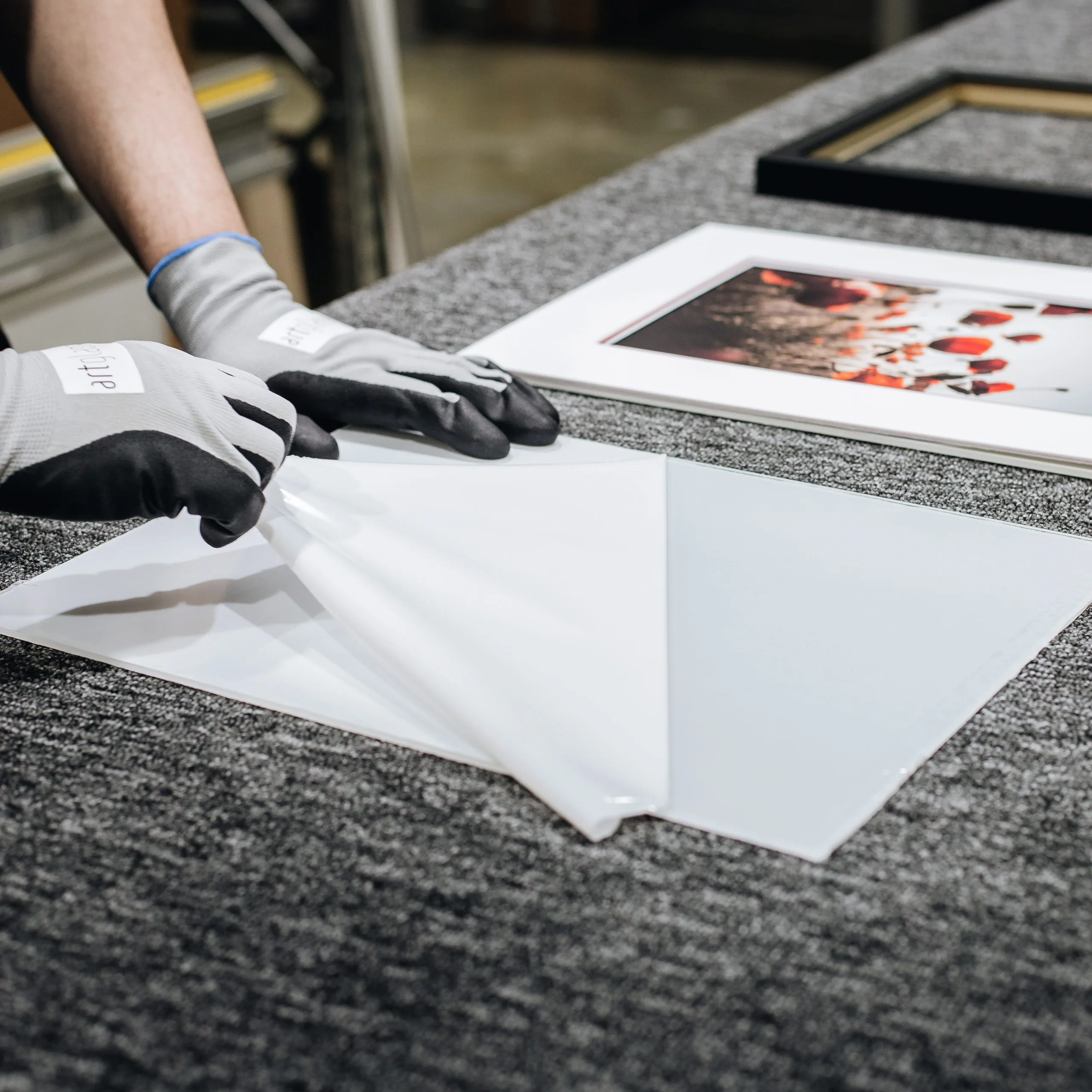
AR 70 and AR 92 cut with the same tools and score-and-break method as ordinary glass, from either side, so the margin on cutting stays in your shop. Practise on samples, follow the cleaning and handling guidelines, and plan each sheet before you score it.
Our free cut list optimiser lays your sizes out across the sheet, and the guide to how many frames you get from a sheet shows which standard sheet wastes least for common mount sizes.
Get found
Put your shop on the Artglass framer map
Groglass runs a public map of frame shops that use Artglass, and its product pages send people who want their art framed with it straight there. The form takes a couple of minutes, and Groglass checks each entry before it appears.
For the counter and the bench
Documents worth keeping to hand
- The Complete Artglass Guide The selling chapter, “Growing with Artglass”, is where the pricing and three-option examples come from.
- Comparative display placement Groglass’s one-page guide to building and placing a comparison display.
- Which glass for which job Our A3 selection chart, made to pin above the bench.
The guide in Polish, German and French, and every other document, is on the downloads page.
Questions
Asked by frame shops
What do the display tools cost?
It depends on which tools you would like and what you order with them, so we do not publish a list. Tell us what you have in mind and we will come back with what is available and how.
We do not buy from you yet. Can we still ask?
Yes. Start with samples or the price list if you like, and ask about display tools in the same message.
Which Artglass should a shop start with?
A common line-up is AR 70 as the standard anti-reflective option, since it cuts like regular glass from either side, with AR 99 Water White or Lifetime Acrylic as the top tier. That is the three-option set-up described above.
Is the framer map ours or yours?
It belongs to Groglass, the manufacturer of Artglass. Any frame shop that uses Artglass can apply on groglass.com, whichever distributor it buys from.
Ready to set up your counter?
Tell us which display tools you would like and where your shop is. We will come back with what is available, usually within one business day.