
The science of seeing
Why the best glass is the one you cannot see
Glazing is the only thing standing between an artwork and the world — light, dust, fingers, accidents. This guide explains how anti-reflective coatings work, why “non-glare” glass is not the same thing, and what ultraviolet light quietly does to everything you frame.
Be clear about your choices
Regular vs anti-glare vs anti-reflective
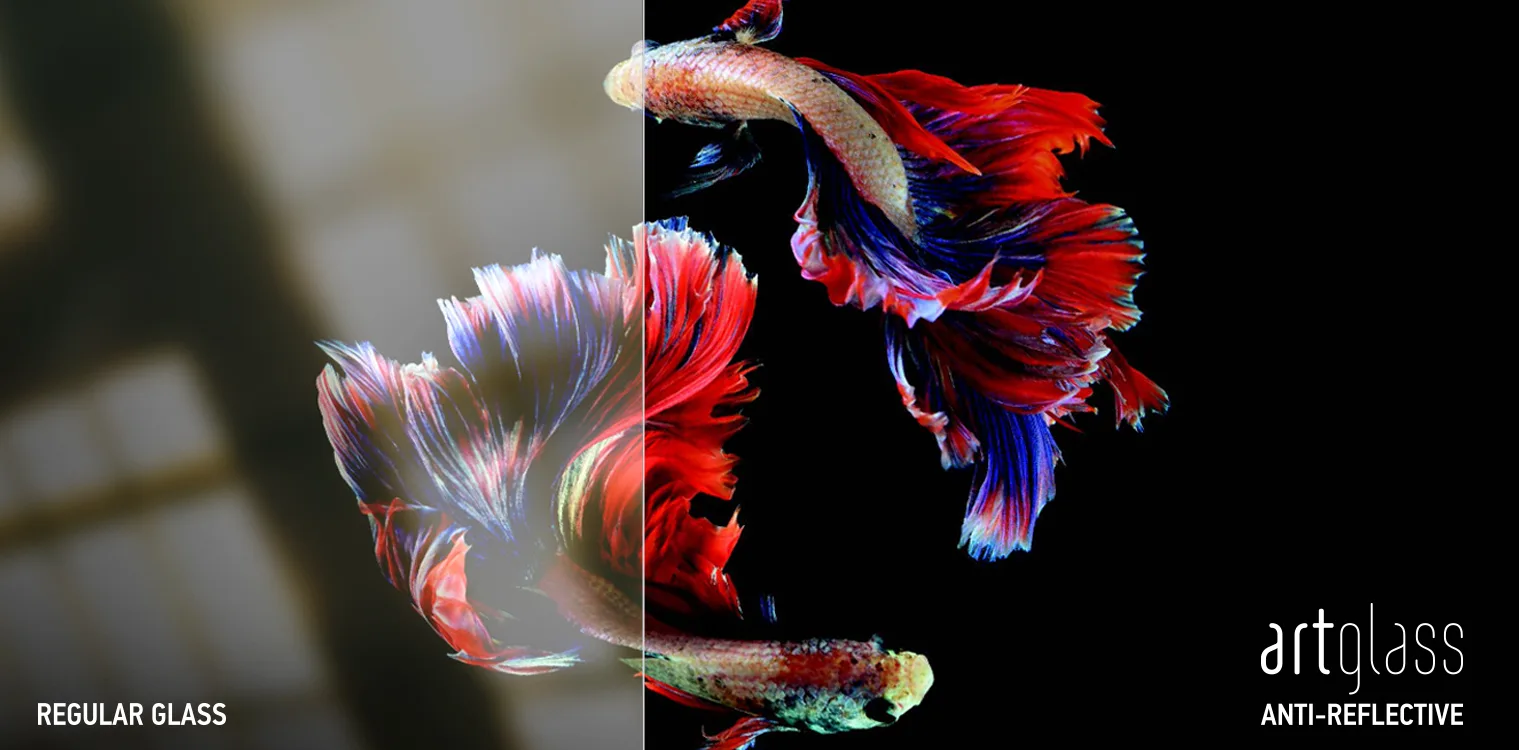
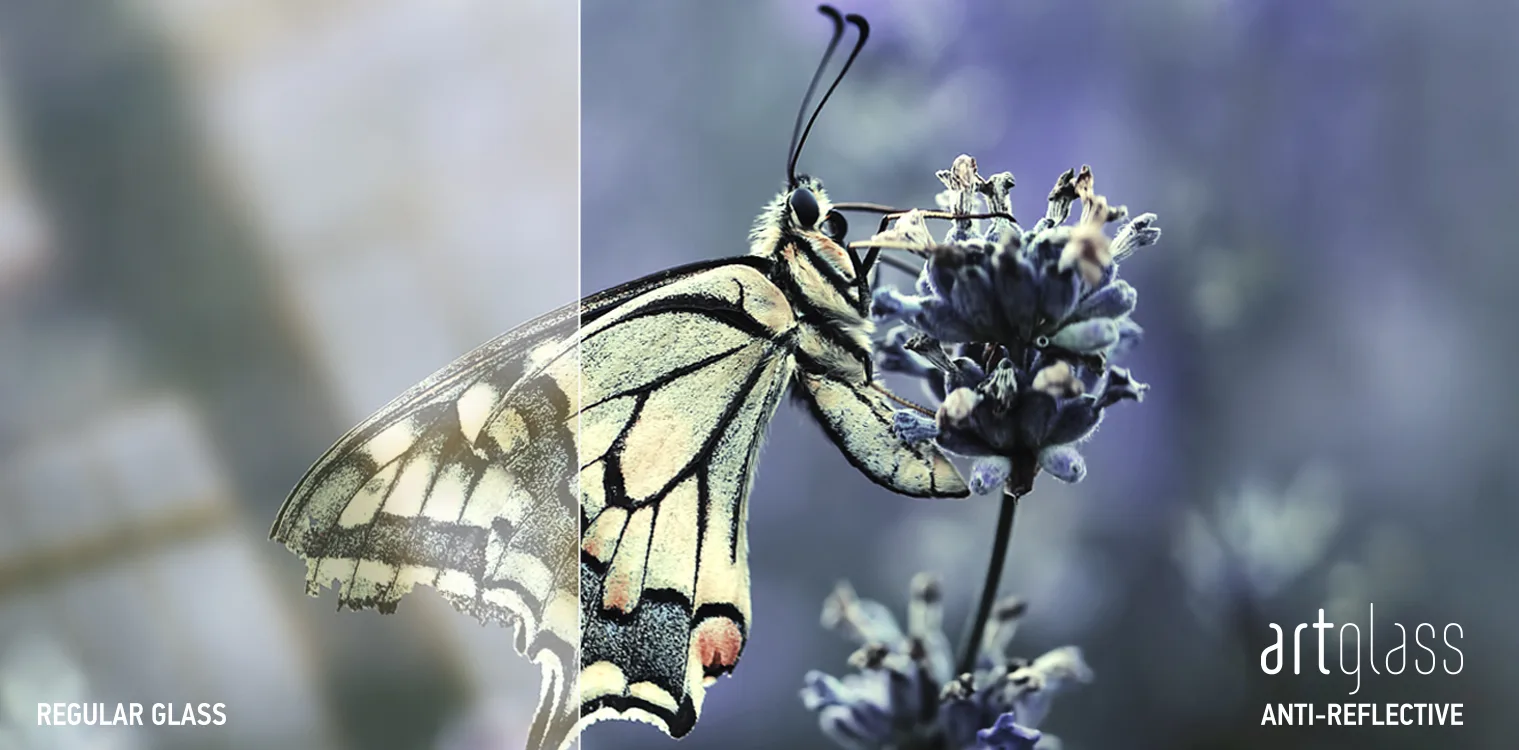
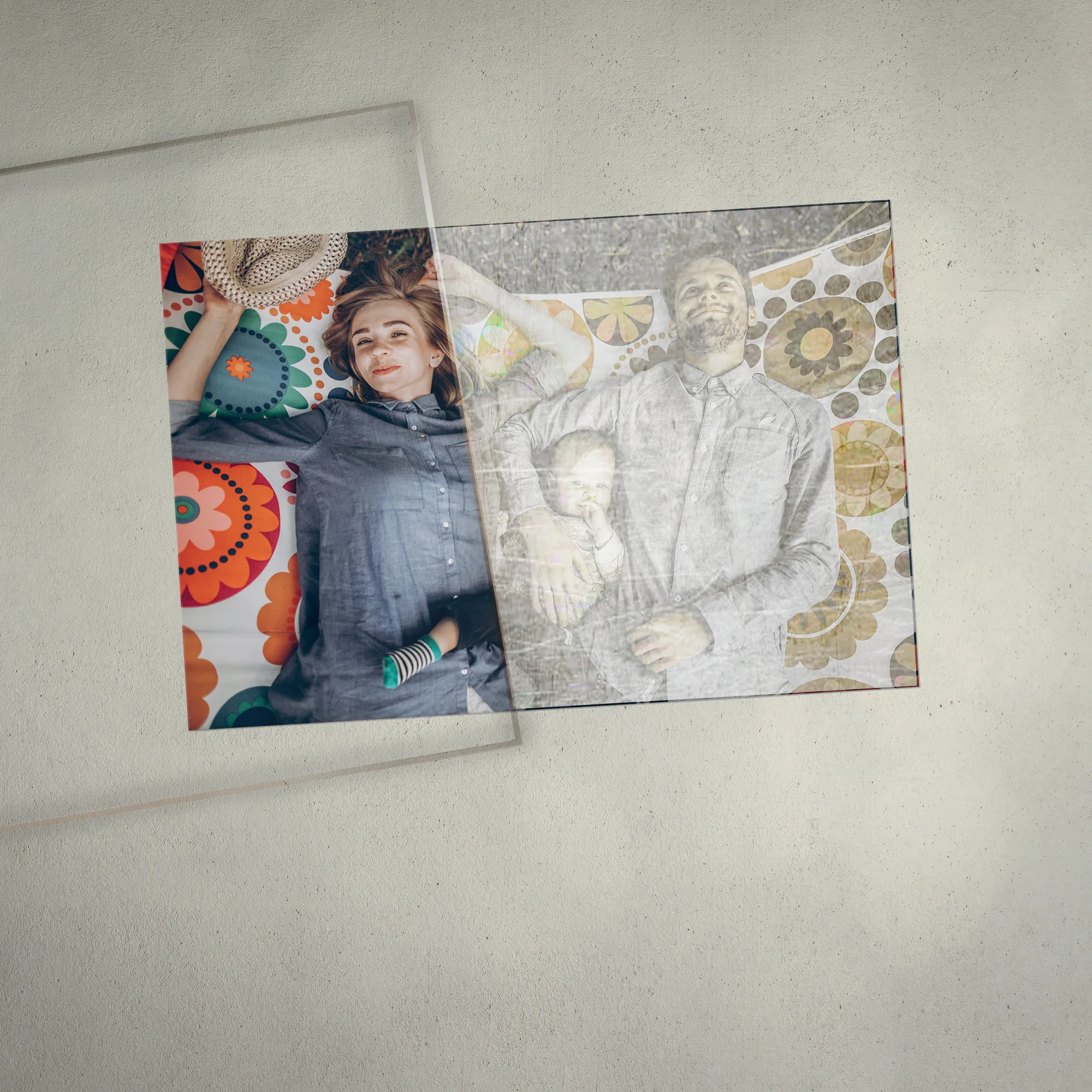
When light hits glass, about 8% of it bounces back as reflections. “Anti-glare” etching only scatters that light — it does not remove it. Anti-reflective coatings do, by manipulating light waves so they pass through to the artwork instead.
The full comparison, including the jobs where etched glass is still a reasonable choice, is in our guide to anti-reflective vs non-glare glass.
| Glazing | Visible reflection | Light transmission | UV protection | Surface | Cleaning | In deep frames |
|---|---|---|---|---|---|---|
| Regular glass | ~8% | ~89–90% | 20–45% | Smooth | Regular | OK |
| Anti-glare (etched) glass | ~8%, scattered | ~89–90% | 20–45% | Etched / granular | Challenging | Not suitable |
| Artglass anti-reflective glass | ~1% | ~98% | Up to 99% | Smooth | Easy — same as regular glass | Exceptional |
The invisible enemy
What UV light does to framed art
Ultraviolet light exists wherever there is daylight. Its short, high-energy waves break down pigments, inks, paper and fabric — fading colours, yellowing paper and making it brittle. The damage is cumulative, irreversible, and expensive or impossible to restore.
Maximum protection — conservation grade
The highest UV protection for your art. Glazing with a 99% UV block qualifies as conservation glass, approved by professionals and conservators worldwide.
AR 99 Water White · Lifetime Acrylic · AR 99 Protect · UV 99
Elevated protection
Significantly lengthens the lifespan of framed work. A suitable choice for exhibiting in controlled-light environments.
AR 92
Basic protection
A significant upgrade from the 20–45% protection of regular glass. Suitable for reproducible artworks and photographs.
AR 70
Technology
Coatings 1/500th the width of a human hair
Artglass is made by Groglass in Riga, Latvia — a world-leading developer of high-performance optical coatings whose nanotechnology heritage goes back to 1962. Using vertical magnetron sputtering, microscopic metal-oxide layers are applied to both sides of the glass in a single manufacturing step, with no direct contact with the surface.
The result is a perfectly smooth, durable, anti-static coating with consistent quality across sheets as large as 2250 × 3302 mm — and a production line where every 10th sheet is tested in detail and every cut-size sheet is manually inspected before packing.
- 99% UV block certified by the National Physical Laboratory (UK), per EN 410
- ISO 1096-2 Class A · ISO 18916 Photographic Activity Test — full glass range
- ISO 18902 (≥ 97% UV) — conservation-grade products
- Meets Fine Art Trade Guild and Professional Picture Framers Association requirements
- Groglass production certified to ISO 9001, 14001, 45001, 50001
Questions
Glazing questions, answered
Want to go deeper? Browse our framing glass guides — practical, manufacturer-accurate answers at article length.
How can I check if framing was done with anti-reflective glass?
Look at the glass at an angle: anti-reflective glass shows a faint, uniform residual reflection with a neutral colour tint (green on most Artglass products, ocean-blue on AR 92) — similar to coated prescription glasses. Regular glass shows bright, mirror-like reflections.
What is the difference between anti-reflective and non-glare glass?
Anti-reflective glass uses optical nano coatings on smooth, clear glass to eliminate reflections while keeping the image sharp. Non-glare (anti-glare) glass has a matte, etched surface that merely diffuses reflections — it looks hazy, obscures detail in deep frames, and its granular surface makes cleaning difficult.
Does UV-protective glass really stop fading?
It dramatically slows it. UV light carries more energy than visible light and is the main cause of fading, yellowing and structural damage — and that damage accumulates and cannot be undone. Blocking 99% of UV is the professional conservation standard; regular glass blocks only 20–45%.
Is Artglass hard to clean or maintain?
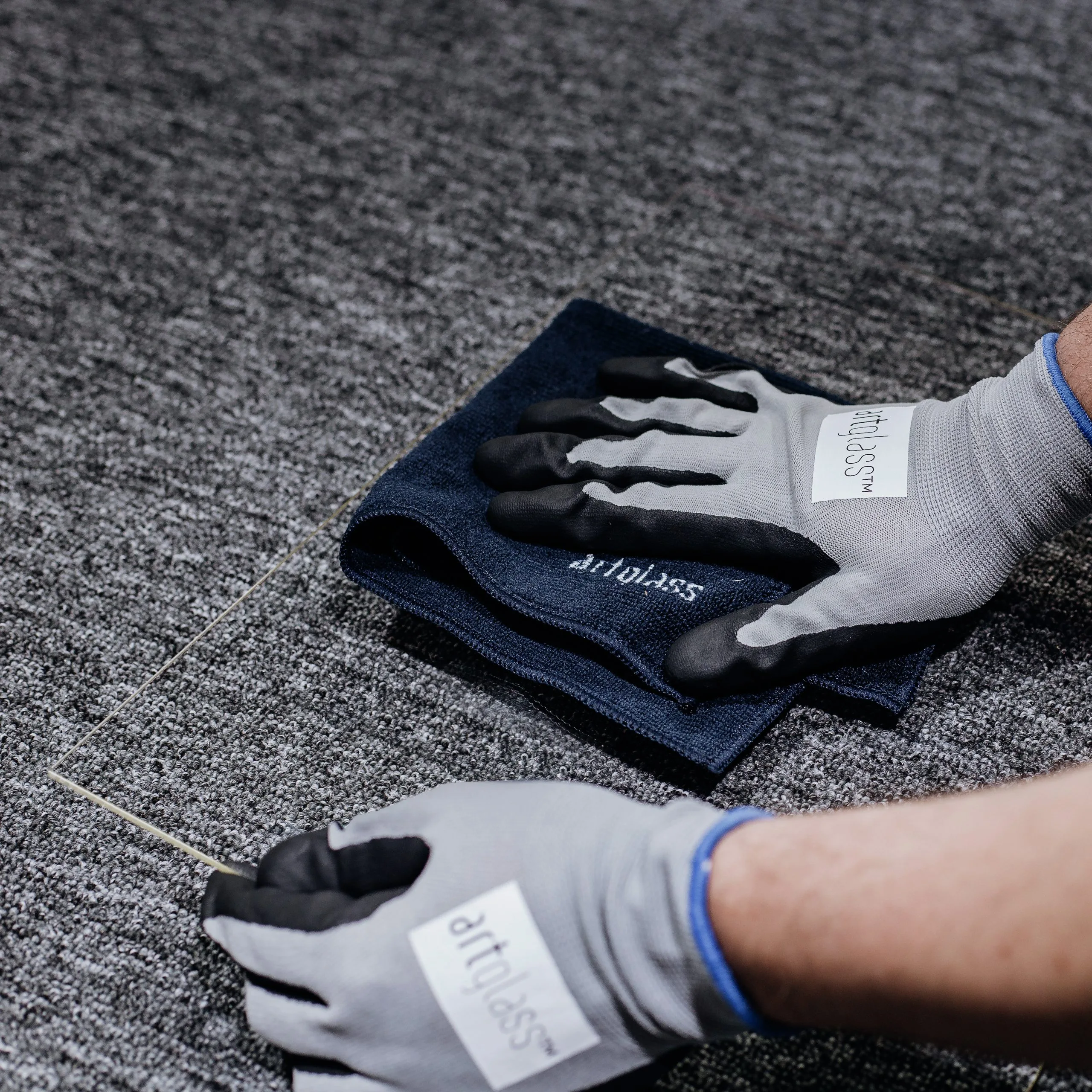
No — the coatings are ultra-smooth and durable. Clean with any ammonia-free glass cleaner (or a 50% ethanol/distilled-water mix) and a soft microfiber cloth. Avoid strong alkalis, acids, fluoride detergents and abrasives.
Can framers cut Artglass themselves?
Yes. AR 70 and AR 92 cut exactly like regular glass, from either side. UV-coated products (UV 99, AR 99 Water White) are scored from the non-coated side, and laminated AR 99 Protect is scored from both sides. Illustrated guidelines are free on our downloads page.
Want to see it with your own eyes?
Ask us for samples or a recommendation — we will help you choose the right level of protection for what you frame.