
UV protection
UV Protection for Framed Art: Which Level Do You Need?
What UV light does to framed art, why regular glass barely helps, and how to choose between 70%, 92% and 99% UV framing glass. From an official EU distributor.
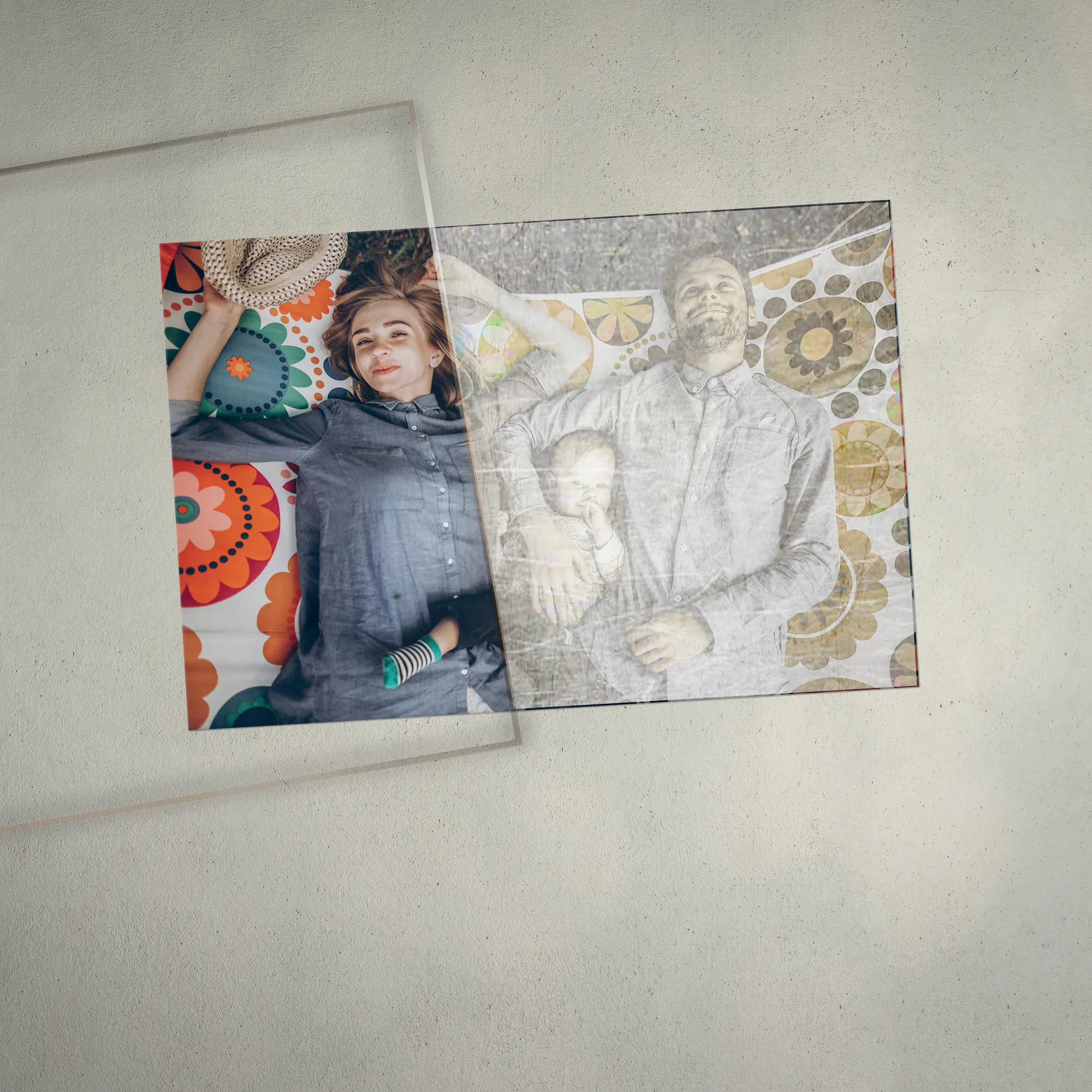
“Does glass protect art from fading?” It is one of the most common questions at the framing counter, and the honest answer is: it depends entirely on the glass. Ordinary float glass blocks only 20–45% of ultraviolet light — the rest passes straight through to the artwork, every hour it hangs in daylight. Purpose-made UV-protective glazing blocks up to 99%, and that difference largely decides whether a framed piece still looks like itself in twenty years.
As an official distributor of Artglass, made by Groglass in Riga, we spend much of our time helping framers match UV protection to the job — enough for the work in the frame, and not more than it needs. This guide covers what UV light actually does behind the frame, the three protection tiers across the Artglass range, what the certifications really say, and how to choose a level for replaceable versus irreplaceable work.
What UV light does behind the frame
Ultraviolet light exists wherever there is daylight — a work does not need direct sun on the glass to be at risk. Its short, high-energy waves break down pigments, inks, paper and fabric: colours fade, paper yellows and turns brittle, textiles degrade. Two properties turn this from a distant risk into a daily framing problem. The damage is cumulative — every hour of exposure adds to the last, so a piece hanging in a bright room ages a little more each day. And it is irreversible — faded is faded, and restoration is expensive at best, impossible at worst.
Works on paper and photographs sit near the top of the risk list, together with watercolours, textiles and other organic materials — precisely the things customers bring in because they matter. Groglass demonstrates the effect with a Q-UV accelerated weathering test, in which 1,174 hours of exposure approximate one year of direct sun: the half of a photograph covered by UV-protective glazing keeps its colour, while the exposed half visibly fades. One simulated year is enough to see the difference with the naked eye.
Three protection tiers: 70, 92 and 99
The Artglass range structures UV protection into three tiers, so you can buy exactly as much protection as the job requires:
| UV block | Protection level | Products |
|---|---|---|
| Over 70% | Basic — a significant upgrade on the 20–45% of regular glass | AR 70 |
| ~92% | Elevated — significantly lengthens the lifespan of framed work | AR 92 |
| 99% and above | Conservation grade — the professional standard | AR 99 Water White · UV 99 · AR 99 Protect · Lifetime Acrylic |
Within the top tier, laminated AR 99 Protect reaches up to 100%, because its PVB safety interlayer adds UV protection on top of the coated glass itself. When a customer asks for “museum glass”, this 99% tier combined with anti-reflective optics is usually what they mean — we unpack the term in our guide to what museum-grade actually means. For the full optical picture across every glazing type — reflection, transmission, substrates — start with our picture framing glass overview.
Conservation protection without the AR coating
Artglass UV 99 occupies a deliberately modest spot in the range: premium float glass with a chemical coating that blocks 99% of UV light, and no anti-reflective coating at all. It looks and handles like regular glass — the roughly 8% surface reflection included — but behind it photographs stop yellowing, paper stops turning brittle and colours keep their intensity.
That makes it the right answer in specific situations: budget-conscious conservation framing; photographs, documents and paper-based keepsakes; and controlled-light environments where reflections are already managed. The trade-off is plainly visible: you get conservation-grade fade protection, not invisibility. If the piece will hang opposite a window and reflections will bother the customer daily, one of the anti-reflective products earns its place.
One handling note: the UV coating sits on one side, marked with an edge label reading “This side faces artwork. Score opposite side.” Frame with the coated side towards the work, and cut only from the non-coated side.
What the certifications actually say
UV percentages are easy to print and hard to verify, so it is worth being precise about which standard belongs to which product:
- The 99% UV block is certified by the National Physical Laboratory in the UK, measured according to EN 410 — the figure stated on the spec sheets of AR 99 Water White and UV 99.
- ISO 18902, which requires at least 97% UV protection, is met by the conservation-grade products: AR 99 Water White, UV 99, AR 99 Protect and Lifetime Acrylic. By definition, the 70% and 92% tiers sit outside this standard — the trade-off you knowingly accept when choosing them.
- Every glass product in the range is rated ISO 1096-2 Class A and passes the ISO 18916 Photographic Activity Test; Lifetime Acrylic passes ISO 18916 as well.
- Lifetime Acrylic additionally passed the improved Oddy test with a perfect score of 0, confirming it emits no gases that could harm enclosed artworks.
If you want the source documents rather than our summary, the official spec sheets are on our downloads page.
Matching the tier to what you frame
The practical rule is replaceable versus irreplaceable.
If the work can simply be printed again — posters, commercial reproductions, everyday family photos — the 70% block of AR 70 is a rational choice: a real upgrade over regular glass at the accessible end of the range. For valuable but reproducible work such as photography and detailed prints, or for framing destined for controlled-light environments, the elevated 92% protection of AR 92 significantly extends the life of the piece.
The moment something cannot be replaced — an original, a signed limited edition, a watercolour, a textile, memorabilia that exists exactly once — the 99% tier stops being an upsell and becomes the professional standard. The asymmetry is the whole argument: a print can be reordered; UV damage cannot be undone. We would rather tell you honestly that a reprintable poster does not need conservation glass than pretend every job does — which is also why the recommendation carries weight when we say “nothing below 99% for this one”.
UV protection is not a glass-only story, either. Acrylic — plexiglass, as customers often call it — can reach the same tier: Artglass Lifetime Acrylic blocks about 99% of UV and meets professional art conservation requirements, while being shatter-resistant and roughly half the weight of glass glazing. That combination decides large formats, travelling exhibitions and children’s areas — and unlike ordinary anti-reflective acrylics, which tend to turn hazy over time, its hard coating is engineered to stay crystal clear. It is also the one product in the range you can order online directly; for the broader trade-offs between the two materials, see our acrylic vs glass comparison.
From decision to quote
Once you know what you frame most, the choice takes minutes: basic protection for the replaceable, elevated for the valuable-but-reproducible, conservation grade for everything that exists only once. To put numbers to it for your sizes and quantities, send your requirements through our glass quote builder — we will come back with a concrete offer from our warehouse in Mārupe (Riga area) — or request the full glass price list by e-mail.
Questions
Quick answers
Does UV-protective glass stop fading completely?
No — it dramatically slows it. UV light carries more energy than visible light and is the main cause of fading, yellowing and structural damage in framed works, and that damage is cumulative and irreversible. Blocking 99% of UV removes the main driver and is the professional conservation standard. Regular glass, by comparison, blocks only 20–45% of ultraviolet light.
How much UV protection do family photos need?
For standard, reprintable photographs, the 70% block of Artglass AR 70 is already a significant upgrade over the 20–45% protection of regular glass. For old family photographs, one-of-a-kind prints or anything that cannot be reprinted, step up to a 99% conservation-grade product such as UV 99 or AR 99 Water White — photographs are among the most fade-prone things people frame.
Which side of UV-protective glass should face the artwork?
Always the coated side. On Artglass UV 99 the coated side is marked with an edge label that also reminds you to score the opposite side when cutting. On AR 99 Water White the UV-coated side is covered by a protective masking film, which stays on during cutting and handling and peels off just before the frame is closed.
Is acrylic as good as glass for UV protection?
Artglass Lifetime Acrylic blocks about 99% of UV light and meets professional art conservation requirements, so it sits in the same conservation tier as the 99% glass products. It is also shatter-resistant and roughly half the weight of glass glazing, which makes it the practical choice for large formats, travelling exhibitions and places where breakage is a real risk.
Ready to choose your glazing?
Build a structured glass quote — products, sizes, box quantities — and we reply with prices and availability within one business day.