
Acrylic glazing
Picture Frame Acrylic: Clear, UV, Non-Glare or Anti-Reflective?
The kinds of acrylic used to glaze picture frames: clear, UV-filtering, non-glare, anti-reflective and museum grade. What each one does, and which to choose.
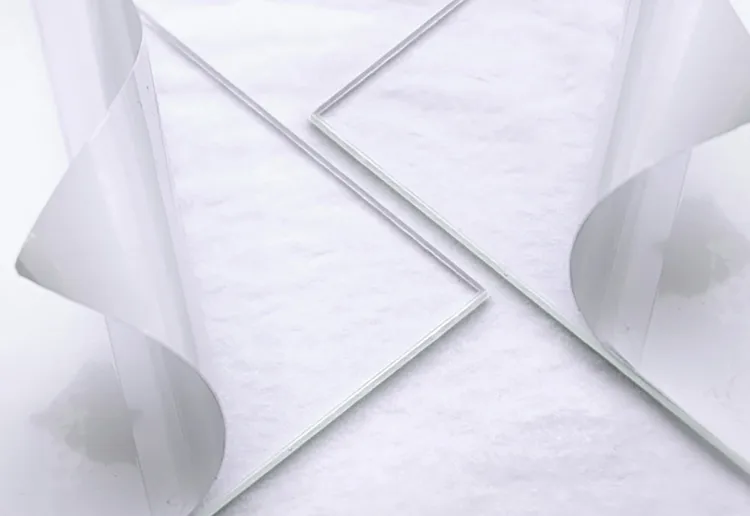
Acrylic has a mixed reputation at the framing counter. Some framers swear by it for large work; others remember sheets that scratched on the first wipe, pulled every speck of dust towards the art and went hazy in a few years. Both groups are right, because “acrylic” covers very different materials. A plain sheet of plexiglass and a museum acrylic share a polymer and little else.
This guide is about which acrylic to choose once you have decided on acrylic. Whether acrylic or glass is right for a job is a separate question, and we answer it in acrylic vs glass for picture framing.
The five kinds at a glance
| Type | What it adds | Reflection | Watch for |
|---|---|---|---|
| Clear acrylic | Light weight and shatter resistance | ~8% | Scratches, static, UV varies |
| UV-filtering acrylic | UV absorbers in the sheet | ~8% | Same surface as clear acrylic |
| Non-glare acrylic | Etched matte surface | ~8%, scattered | Soft image over mounts, hard to clean |
| Anti-reflective acrylic | Optical coatings | ~1% | UV level, hard coat, hazing |
| Museum acrylic | Anti-reflective, 99% UV, hard coat, anti-static | ~1% | Still a softer surface than glass |
Every type keeps acrylic’s two physical advantages over glass. It weighs roughly half as much, and it does not shatter. What separates them is everything else.
Clear acrylic
Clear acrylic is what most people mean by plexiglass: a plain sheet of PMMA with no coatings. It reflects about 8% of visible light, the same as regular glass, so it puts the same bright reflections in front of the artwork.
Its weaknesses are on the surface. Ordinary acrylic scratches easily, and it builds up static that pulls dust onto the glazing. With pastel, charcoal or other loose media, that static can lift particles off the artwork onto the inside of the sheet. UV protection depends on the grade, and plain sheet is not made for it, so unless the data sheet gives a figure, do not assume it protects anything from fading.
For a poster in a child’s room, or a frame that has to survive being knocked off a wall, clear acrylic is a reasonable choice. Ready-made frames often use thinner plastics such as polystyrene or PET, which are not acrylic at all.
UV-filtering acrylic
UV-filtering acrylic has UV absorbers mixed into the sheet. It looks and handles like clear acrylic: it reflects about 8%, and it scratches and holds static just as easily unless it also has a hard coat. What it adds is fade protection.
How much protection is the number to check. Conservation glazing blocks 99% of UV, and ISO 18902 asks for at least 97%. A sheet sold as “UV acrylic” without a stated figure tells you very little. Our guide to UV protection for framed art explains which works need which level.
Non-glare acrylic
Non-glare acrylic has an etched, slightly granular surface. It does not remove reflections; it scatters them, so a bright window turns into a soft, milky patch instead of a sharp mirror image. Groglass’s comparison puts it plainly: anti-glare glass and anti-glare acrylic diffuse reflections instead of eliminating them, the effect “can be distracting in deep frames”, and “the grainy texture makes cleaning the glazing more difficult”.
The catch is depth. Non-glare glazing only looks sharp when it lies directly on the artwork. Add a mount, spacers or a box frame, and the image softens with every millimetre between the two. The physics is the same as for non-glare glass, set out in our guide to anti-reflective vs non-glare glass.
Anti-reflective acrylic
Anti-reflective acrylic has thin optical coatings, the same principle as anti-reflective glass. Instead of scattering reflections, the coatings cancel most of them, bringing reflection down from about 8% to about 1% while the surface stays smooth and the image stays sharp, whatever the depth of the frame.
Three questions separate one anti-reflective acrylic from the next:
- What UV protection does it give? An anti-reflective coating says nothing about UV. Check the figure.
- Is it hard-coated? An acrylic surface without a hard top coat scratches easily, coated or not.
- Will it stay clear? Many anti-reflective acrylics turn hazy over time. Ask what the maker says about long-term clarity.
Museum acrylic: all of it in one sheet
Museum acrylic, sometimes called conservation acrylic, is anti-reflective acrylic with nothing left out. It is the acrylic equivalent of museum-grade glass, and the specification reads like a checklist:
- Reflection around 1%, from an anti-reflective coating
- 99% UV protection
- A hard top coat that makes the surface scratch-resistant
- An anti-static finish, so the sheet does not pull in dust or loose media
- Proof it is safe to seal in with the art: passing the Oddy test and the ISO 18916 Photographic Activity Test
The Oddy test is the museum world’s check for materials used near artworks. Small metal samples are sealed in with the material, kept warm and humid for weeks, and then examined for corrosion. A material that gives off harmful gases shows up on the metal.
Artglass Lifetime Acrylic is our reference for the category, and its numbers cover every line of that list:
| Property | Artglass Lifetime Acrylic |
|---|---|
| Reflection | ≤ 1.1% |
| Light transmission | ~98% |
| UV protection | ~99% |
| Surface | Hard-coated, scratch-resistant, anti-static |
| Conservation tests | Improved Oddy test, perfect score of 0; ISO 18902; ISO 18916 |
| Residual reflection colour | Neutral green |
| Thickness | 3, 4.5 or 6 mm |
Lifetime Acrylic has been tested by the National Conservation Service and Chiralab Ltd., and Groglass says the Oddy result confirms it does not emit any harmful gases. The “Lifetime” in the name is about staying clear: it is engineered not to haze the way many anti-reflective acrylics do. One honest limit remains: a hard coat resists scratches, but glass is still the harder surface.
Thickness follows the size of the frame: 3 mm for standard formats, 4.5 mm above 2 × 1 m and 6 mm from 2 × 2 m. Our guide to picture frame glass thickness explains why acrylic needs that rule and glass does not.
Working with acrylic in the workshop
Acrylic is easier to cut than glass, but it asks for different habits. Groglass’s handling guidance for Lifetime Acrylic:
- Keep the film on. The sheet is masked on both sides. Leave the film on as long as possible and peel it only at final assembly.
- Cut from either side. Score several times with a multi-material scoring knife, then snap the sheet over the edge of the table, or use a saw blade made for acrylic. Use a power saw for 4.5 and 6 mm.
- Deal with the static once. Peeling the film charges the surface; one pass with an anti-static brush, gun or cloth clears it.
- Frame with either side facing the artwork. Unlike UV-coated glass, Lifetime Acrylic has no inside or outside.
- Store it flat, largest sheets at the bottom, or vertically at no more than a 10° lean, so it does not bend.
For cleaning, use a soft cloth and a non-abrasive cleaner. The cleaning and handling guide covers acrylic alongside the glass products.
Which acrylic for which job
- Posters, children’s rooms and tight budgets: clear acrylic. It is safe and light, and nobody expects museum optics.
- Anything that can fade and cannot be replaced: at least a stated 99% UV block, from UV-filtering or museum acrylic.
- Work behind a mount, spacers or in a box frame: anti-reflective, not non-glare. Etched acrylic blurs anything not pressed against it.
- Large, travelling, valuable or public work: museum acrylic. The weight, the shatter resistance and the optics all count at once. If a public wall needs glass instead, the laminated AR 99 Protect holds together when it breaks.
- Pastel and charcoal: glass is the safe default, because it carries no static. If weight rules glass out, an anti-static museum acrylic is the workable alternative.
Buying Lifetime Acrylic
Lifetime Acrylic is the one Artglass product you can order online with instant prices, in any quantity, even one sheet. It comes in eleven standard sheet sizes from 405 × 510 to 1970 × 2580 mm, or cut to size up to 1930 × 2540 mm in all three thicknesses, and there is a sample pack if you want to see it next to your current acrylic first.
If you are still deciding between acrylic and glass, start with acrylic vs glass for picture framing. For a job with special sizes or quantities, ask us: we reply within one business day.
Questions
Quick answers
What is the best acrylic for picture framing?
For valuable, large or travelling work, museum acrylic: anti-reflective coating with about 1% reflection, 99% UV protection, a hard scratch-resistant coat and an anti-static finish. For a poster in a child's room, plain clear acrylic does the job. The type matters more than the word acrylic, so check the reflection and UV figures on the data sheet.
Is non-glare acrylic the same as anti-reflective acrylic?
No. Non-glare acrylic has an etched, matte surface that scatters reflections instead of removing them, and the image behind it goes soft as soon as there is a mount or spacer between the two. Anti-reflective acrylic has thin optical coatings that cut reflection to about 1% while the surface stays smooth and the image stays sharp.
Does acrylic glazing block UV light?
It depends on the grade. UV-filtering and museum acrylics are made to block UV; plain acrylic sheet is not made for it, and its UV performance varies. Look for a stated figure: 99% is conservation grade, and ISO 18902 asks for at least 97%. Artglass Lifetime Acrylic blocks about 99%.
Why does acrylic attract dust?
Acrylic builds up static charge, especially when the protective film is peeled off, and the charge pulls in dust and loose particles. Anti-static acrylic has a coating that keeps the charge down. With Artglass Lifetime Acrylic, Groglass recommends one pass with an anti-static brush, gun or cloth after removing the film.
Can anti-reflective acrylic go cloudy?
Many anti-reflective acrylics turn hazy over time, which is part of acrylic's mixed reputation among framers. Artglass Lifetime Acrylic has a hard protective top coat and is engineered to stay clear for the long term; that is where the name comes from.
Try museum-grade acrylic
Artglass Lifetime Acrylic is ordered online with instant pricing — standard sheets, cut to size, or a €15 sample pack that ships free.